Key points
- Plan containers by phase: demolition, framing, drywall and finish produce very different debris.
- Keep heavy debris (concrete, brick, block, dirt) in a separate, smaller container.
- Choose the container spot before material deliveries fill the lot.
- Agree swap notice, overage rates and who handles street permits before the job starts.
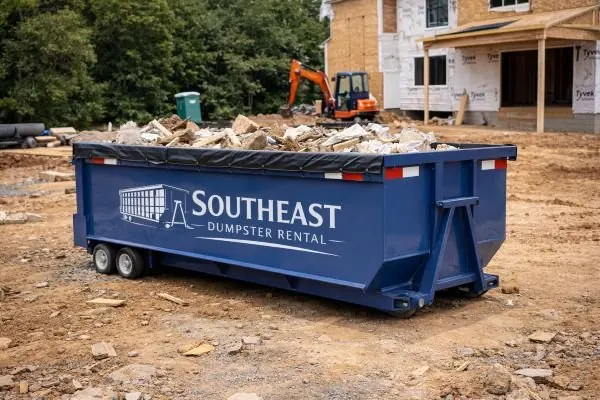
The container is part of the schedule
For a contractor, a dumpster is not a one-off purchase; it is a service that runs alongside the job. It needs to be there before demo day, swapped when it fills, sized for what each phase produces, and gone when the site is handed over. On Southeast job sites, the details include red clay that turns to mud, summer storms, tight infill lots in Atlanta, Nashville, Durham and Charlotte, and HOA rules in new communities. This guide covers how to plan for all of it. For the service itself, see construction dumpster rental.
Plan by phase
Different phases produce different debris, and the right container changes with them.
Demolition and strip-out
Plaster, lath, drywall, old cabinets, flooring, fixtures, sometimes masonry. Heavy and mixed. A 20 or 30 yard container for general debris, plus a 10 yard for any concrete, brick or tile, is a common setup. Expect fast fills.
Framing
Offcuts, sheathing scraps, packaging, banding. Light and bulky. A 30 or 40 yard container suits it, and swaps are less frequent.
Roofing
Shingles are heavy. A 10 or 20 yard, depending on the number of squares and layers, often set close to the eaves so the crew can drop debris straight in.
Drywall and insulation
Bulky scraps and lots of packaging. Drywall soaks up water, so tarp the container in summer storms.
Finish and cleanup
Trim offcuts, flooring scraps, fixture boxes, general cleanup. A smaller container often finishes the job.
Keep heavy debris separate
Concrete, block, brick, rock and dirt fill a container's weight allowance quickly, and many haulers want them separated from general debris. Some send clean concrete to recyclers. A separate, smaller container filled partway avoids overweight charges and refused loads. Ask the hauler how they want heavy debris handled before you break ground.
Pick the spot before deliveries arrive
On a tight lot, the dumpster competes with lumber drops, a portable toilet, a concrete truck's approach, the crew's trucks and sometimes a neighbor's driveway. Decide where it goes before anything else lands. Good spots are level, firm, reachable by a truck backing in straight, away from overhead lines, and close enough that the crew does not waste time carrying debris.
Red clay and sandy soils both soften in rain. A loaded container on bare ground can sink or rut, and a truck can get stuck. Lay down a gravel pad or plywood if you can.
Street placement and permits
If the lot cannot take the container, the street becomes the option, and that brings in the city's right-of-way rules. In Charlotte that is CDOT; in Nashville, Metro's NDOT; in Atlanta, the city's Department of Transportation. Our permit guide covers all sixteen cities. Settle who applies, the contractor or the hauler, before the job starts, and plan the approval period around the schedule.
Swaps and communication
Ask the hauler:
- How much notice do you need for a swap?
- What happens if a container is overfilled above the rails?
- What is the overage rate per ton?
- Can you deliver early to avoid crews and traffic?
- Who on site should the driver call on arrival?
Keep loads level with the rails. Overfilled containers can be refused, and that costs a trip.
HOAs in new communities
Many new subdivisions in Huntsville, Clarksville, Marietta and around the Southeast's growing suburbs have HOAs or developer rules covering construction containers: placement, screening, how long they stay, and site tidiness. Ask the HOA or developer for their contractor rules at the start.
Weather
Southeast summers mean afternoon thunderstorms. Spring brings severe weather to Alabama and Tennessee. Hurricane season affects coastal Georgia and can bring heavy rain inland. Practical steps:
- Tarp absorbent debris to avoid paying for water weight.
- Secure light debris so wind does not scatter it.
- Ask the hauler about their policy if a major storm is forecast.
Long-term terms
For jobs that run weeks or months, ask about monthly terms with included hauls, rather than stacking daily extensions. Typical market ranges for monthly rentals are on the pricing page.
A sample setup for an intown renovation
Take a typical job: a 1940s brick ranch in an established Atlanta or Charlotte neighborhood, getting a full interior gut and a rear addition. The lot has a single-width driveway and a backyard reachable only through a side gate.
- Week one, strip-out. A 20 yard container at the top of the driveway, boards under the rails. Plaster, cabinets, flooring and old fixtures go in. It fills in a few days and is swapped once.
- Foundation work. Old patio slab and footings broken out. A 10 yard container for concrete only, filled about halfway, then hauled to a recycler or landfill as the hauler directs.
- Framing and roofing. Back to a 20 yard, or a 30 if the driveway allows the length. Shingles from the tie-in go in early so the weight is known.
- Drywall to finish. One more 20 yard, tarped through the afternoon storms, then a final pickup when the site is cleaned.
Four or five hauls, two sizes, one spot that never touches the street. That is the shape most renovation jobs take once the phases are planned.
Documentation worth keeping
Keep the hauler's delivery and pickup tickets with the job file. They show dates, container sizes and, often, weights, which helps when a client asks what disposal cost or when a project needs a record of debris handling.
Booking
Call (678) 916-9637 with the site address, the job type, the phases and the timeline. We will line up an independent local hauler that serves the area and can keep pace with the job.
General information for planning a rental. Rules and prices vary by city and change over time; confirm locally and get an exact quote by phone.